Key Takeaways
- Personal stories create connection. Instagram content trends are increasingly focused on authenticity. Personal advice, real experiences and relatable moments help creators build stronger connections with their audiences.
- Useful content gives people a reason to save and share. Tips, guides, how-tos and educational posts offer practical value that audiences can revisit later.
- A clear CTA turns viewers into active participants. Resources, downloadable guides and comment prompts encourage audiences to take action instead of simply scrolling past.
- Relatable content gets people talking. Humour, POVs, hot takes and shared experiences can spark comments, shares and conversations.
- One brand message can work across different content formats. Creator communities allow for different storytelling styles while keeping the same campaign message. This helps creators stay authentic to their audiences.
As we move further into the second half of 2026, some content formats are clearly standing out from the rest.
The posts gaining traction right now are not just getting views. They are also driving shares, saves, comments and watch time.
Instagram and TikTok remain two of the most influential platforms for creator content. But what works on each platform can look very different. Content formats, discovery and audience behaviour all vary. Understanding these differences can help brands create content that feels more natural on each platform.
In Part 1 of this series, we explore five Instagram content trends in 2026 that are capturing attention. We’ll look at real creator examples and how brands are putting these trends into practice.
Wondering what’s happening on TikTok? Stay tuned for Part 2, where we’ll explore the trends shaping TikTok and compare how the two platforms differ.
What Does Instagram Look Like So Far in 2026?
In general, Instagram remains a highly visual platform where content is often more curated and thoughtfully presented. But in 2026, it’s no longer just about having a polished feed. Creators and brands are using a wider mix of formats to connect with audiences. This includes Reels, photo dumps, carousels, text-led slides and Stories. The format they choose often depends on how they want audiences to engage.
According to Metricool’s 2026 Instagram Study, which analysed more than 24 million posts, Reels remain one of the strongest formats for discovery and interaction, while carousels generate nine times more saves than single-image posts. Stories also continue to play an important role in building community, with replies increasing 88% year-on-year. Together, these formats make Instagram a strong platform for visual storytelling, shareable and save-worthy content, and ongoing audience engagement.
So, what’s been capturing attention on Instagram this year?
Here are five creator content trends that have been standing out in 2026 so far.
1. Advice & Personal Insights
→ personal lessons, BTS, transformation, before/after
Personal stories and advice are the kind of content that can easily make someone stop and think, “I’ve been through this too.” Whether it’s sharing lessons learned, things they wish they knew earlier or personal experiences, this type of content feels genuine and easy to relate to. Because audiences can see parts of their own experiences reflected in the story, they’re more likely to engage, share their own thoughts or even send the post to someone who might relate.
Take Chelsea’s (@offbeatsingaporean) post, for example, where she shares the life lessons she wishes she had known in her 20s.
By sharing her own experiences, she turns personal reflections into relatable advice. This gives audiences something they can learn from, reflect on and apply to their own lives.
This reflects a broader shift towards more authentic and relatable content on Instagram. According to HubSpot, 37% of Instagram marketers surveyed use relatable and authentic content, while 36% incorporate behind-the-scenes content into their strategies.
2. Educational & Value-Driven
→ tips, cheat sheets, Myth vs Fact, guides, how-tos
Sometimes the best Instagram content ideas are also the most useful.
With educational content gives audiences something useful they can take away and apply in their everyday lives. Whether it’s quick tips, how-tos, cheat sheets or simple guides, these posts help answer a question or solve a problem. With practical information that’s easy to revisit, audiences are more likely to save or share the content for later.
Take Catherine (@catherine._.goh), for example. In her Reel, she shares different tips on how to manage tight deadlines and get work done in a more productive manner. Breaking down a common workplace challenge into practical, actionable advice gives viewers useful tips they can apply when facing similar situations.
Educational content offers a way to provide value beyond simply promoting a product or service. Sharing useful knowledge that is relevant to their target audience can help brands become a trusted resource. It also gives audiences a reason to save, share or return to the content.
3. Resource / Lead-Magnet
→ free guides, templates, “comment GUIDE”, downloadable resources
Sometimes, giving audiences a little extra value can go a long way. Resource-driven content goes beyond quick tips. It gives audiences something useful they can take away, such as a free guide, template, checklist or downloadable resource. Creators can also ask viewers to comment with a keyword to receive it. This encourages audiences to actively engage with the post instead of simply scrolling past.
In Bev (@dearfoodiepebbles) carousel posts, she first provides useful content through the post before giving her audience access to a more detailed resource. In her caption, she also encourages engagement by prompting users to comment “DEAL” and she’ll send over all the details, links and how to claim it. This creates a clear call-to-action while offering additional value to those who want to explore the topic further.
This type of content creates a natural next step after someone discovers a post. It encourages passive viewers to comment, engage or take further action.
4. Opinion, Relatable & Conversation-Led
→ hot takes, memes, relatable observations, audience questions
Content that gets people talking often makes them think, “This is so true” or “I know someone exactly like this.” Relatable observations, memes, hot takes and everyday situations tap into experiences audiences recognise. This sense of familiarity can encourage viewers to share the post, tag a friend or add their own experiences in the comments.
Take Yeoshi (@Yeoshinoya) who turns familiar Singapore corporate conversations into a humorous POV Reel. Recreating conversations and interactions that working adults may recognise from their own offices makes the content feel instantly relatable. Humour also keeps it light and entertaining.
For brands, relatable content offers a way to connect with audiences through shared experiences without directly promoting a product or service.
When done naturally, it can make branded content feel more culturally relevant, conversational and shareable.
5. Collaborative and Community-led content
→ brand × creator, UGC, recurring series
Community-led content works because creators often build their following around shared interests, lifestyles or life stages. For family and parenting creators, everyday moments like preparing meals, grocery shopping or spending time with their children can feel instantly relatable. These familiar experiences help them connect naturally with young parents going through similar stages of life.
Creators such as @itsjeanlum, @dearmama.char and @motherofchessons have built communities around family and parenting content. For their audiences, grocery shopping isn’t just another errand. It’s part of planning meals for the family, shopping for their little ones and managing everyday household needs. This makes grocery-related content relevant to both the creator’s usual lifestyle content and the community following them.
Partnering with creators whose communities already have a natural connection to the product or experience can make branded content feel less like an advertisement and more like an extension of the content audiences already follow them for.
FairPrice Group Case Study: Different Stories, One Brand Message
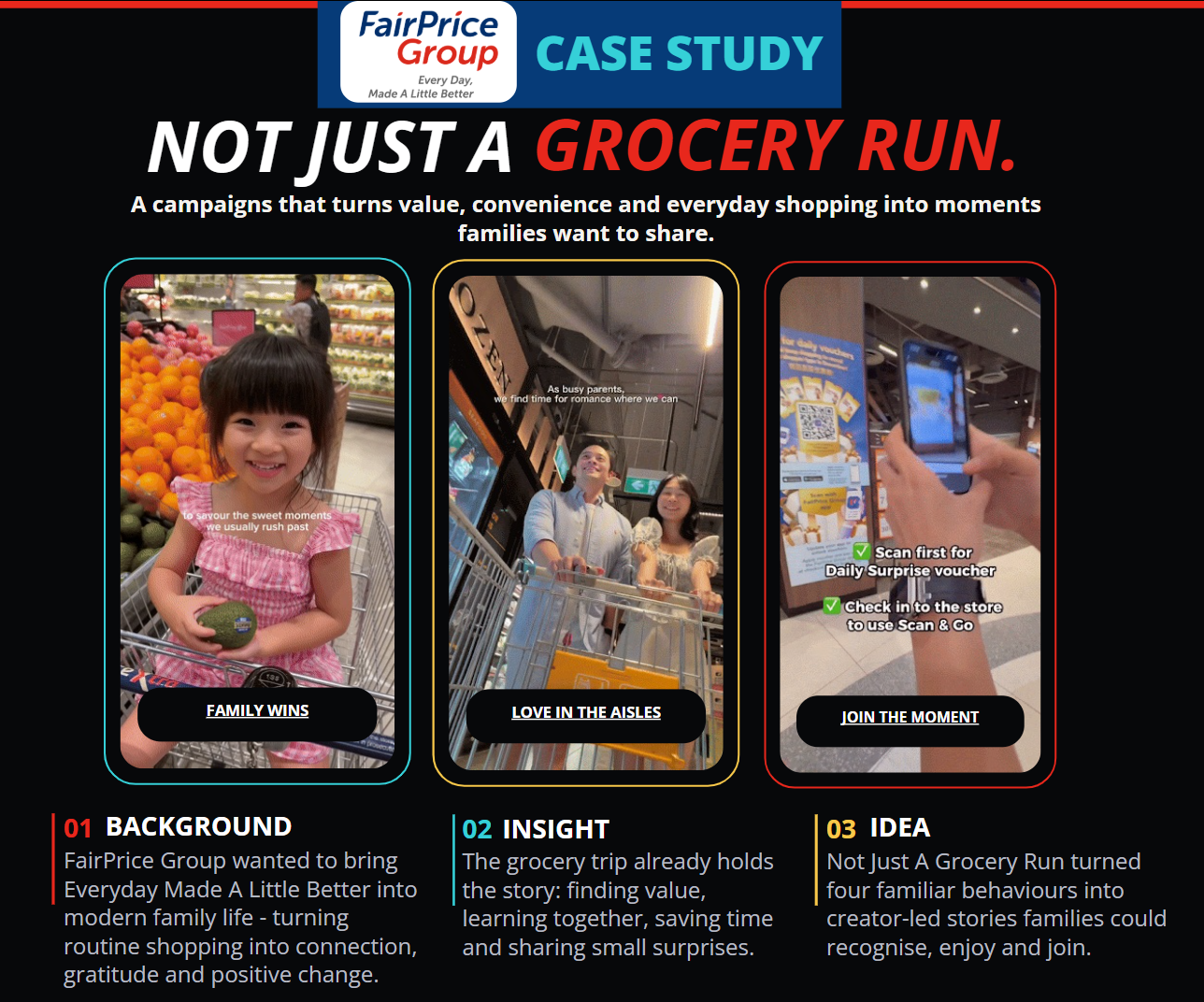
A strong example of this is FairPrice Group’s “Not Just A Grocery Run” campaign with KOBE. The campaign worked with these creators, with each bringing their own perspective to the everyday grocery run.
Rather than having all three creators follow the same content structure, each incorporated the campaign into their own style of family-focused storytelling. From family moments and finding time together to highlighting the value and convenience of shopping at FairPrice, their individual stories differed while still speaking to similar everyday experiences shared by their communities.
While the executions were different, they ultimately led back to the same campaign message: a grocery run can be more than just a routine task. By allowing each creator to interpret that idea through experiences their audiences could relate to, the campaign communicated one brand message through multiple authentic voices.
*The concept: “FairPrice’s Not Just A Grocery Run campaign” turns everyday grocery trips into relatable family stories, highlighting moments of value, convenience and connection.
Conclusion
The Instagram content trends shaping 2026 show that successful content isn’t just about looking good on the feed. Audiences are responding to content that feels useful, relatable, personal and worth engaging with.
For brands, the opportunity lies in understanding what audiences already enjoy consuming and working with creators to bring brand messages into those formats naturally. Whether it’s an educational Reel, a relatable POV or a creator-led campaign, the format may change, but the goal remains the same: create something audiences actually want to watch, save, share or talk about.
And that’s only one side of the story. In Part 2, we’ll turn our attention to TikTok to explore the content trends shaping the platform in 2026 and find out whether Instagram and TikTok are really as different as they seem.
Frequently Asked Questions
1. What are the biggest Instagram content trends in 2026?
Some of the Instagram content trends standing out in 2026 include personal storytelling, educational content, resource-driven posts, relatable and conversation-led content, and creator communities.
2. What type of Instagram content gets the most engagement?
There isn’t one format that works for every audience. Reels can be effective for discovery and interaction, while carousels are particularly useful for content people want to save and revisit. The strongest format ultimately depends on the content objective and audience.
3. Are Instagram Reels still important in 2026?
Yes. Reels remain an important format for reaching and engaging audiences on Instagram. However, brands shouldn’t overlook carousels, Stories and other formats that serve different audience behaviours.
4. How can brands use Instagram content trends effectively?
Rather than following every trend, brands should choose formats that fit their message, audience and objectives. When working with creators, giving them room to adapt the idea to their own content style can also make the partnership feel more natural.
5. How can KOBE help brands create the right Instagram content for their next campaign?
KOBE helps brands connect with suitable creators and explore content styles that align with their campaign goals. By tapping into each creator’s unique voice and audience, brands can deliver content that feels authentic while staying true to their key message.