


Key Takeaways
- Brand association is what people connect with your brand, from practical benefits to feelings, values and experiences.
- Creator fit shapes the message. Choose influencers whose identity, content and audience support what you want your brand to represent.
- Show viewers why the brand matters to them. Demonstrations and personal stories can connect products with everyday needs.
- Keep the core message consistent, while giving creators freedom to express it in their own style.
- Measure audience perceptions alongside engagement. Surveys and relevant comments help assess whether the intended message came through.
Building brand association means giving people something specific to connect with your brand. That could be easy home cooking, dependable skincare or the confidence to try something new.
Influencer marketing can help make those connections tangible. The creators a brand partners with, the stories they tell and the situations they show all provide clues about what the brand represents.
For brands planning a campaign, this creates an important question: After people see the content, what do you want them to remember about your brand?
The answer should guide everything from creator selection to how you measure the campaign.
What Is Brand Association?
Brand association refers to the ideas, feelings, qualities and experiences people connect with a brand.
These associations might concern a product’s function, such as making cleaning easier, or something more emotional, such as feeling prepared or supported.
Kevin Lane Keller’s research on customer-based brand equity identifies favourable, strong and unique associations in consumers’ memory as an important part of brand equity.
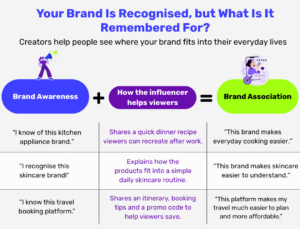
An influencer campaign can introduce your name to new audiences. To build a specific association, the content also needs to communicate something meaningful about the brand.
Before choosing creators, complete this sentence: “We want our audience to associate our brand with…”
Choose a clear idea that the product or service can genuinely support.
How Creator Brand Fit Shapes Brand Perception
Creators bring their own identities to a partnership. Their interests, expertise, personality and content history help audiences interpret the brands they feature.
A creator known for practical weekday recipes, for example, could demonstrate how an appliance helps busy households prepare dinner. Another creator known for elaborate hosting might use the same product to communicate creativity and entertaining.
The product remains the same, but the context changes the message.
For instance, creator @naploes put a playful spin on her Yo-Chi visit with a “sneaking into the store” hook. The video attracted over 320,000 views, showing how an entertaining approach can draw attention to a brand while presenting it as part of a fun, spontaneous experience.
@naploes i snuck into Yo-Chi and i got caught LMAO... 😭😭 the dude said they are opening this FRIDAY 15th Aug from 11am!!! alsoooo you get 20% off your first Yo-Chi if you download the Yo-Chi app… 👀 @iloveyochi.sg #sp ♬ Tchaikovsky "Dance of the Reed Flutes"(1257471) - kzy
This is why influencer brand fit deserves attention beyond follower demographics. Brands should consider whether the creator’s established identity supports the meaning they want to communicate and whether that meaning matters to the audience.
Research examining fashion influencer marketing considers the relationships between the influencer, product and consumer together, highlighting the relevance of these connections when planning partnerships.
A related concept is meaning transfer: qualities associated with an endorser can influence how people perceive an endorsed brand. Research on celebrity endorsement has found that both positive and negative traits can transfer to brand beliefs. It provides a useful principle for thinking carefully about the associations a partnership introduces.
When reviewing a creator, ask:
- What do audiences already know this person for?
- Does that support our brand identity?
- Do they have a credible reason to use or discuss our product?
These questions help establish a clear connection between the creator and the campaign message.
Connect Your Brand With Everyday Needs and Occasions
A product feature becomes easier to understand when people see where it fits into their lives.
Creators can demonstrate that connection through routines, tutorials and practical examples. A compact vacuum might appear during a quick clean before guests arrive. A food product could become part of a familiar weekday lunch.
For a Singapore audience, the situation might involve preparing dinner after work, getting ready in a small HDB bathroom or planning an activity with the family. The context should reflect how the intended audience would realistically use the product.
The planning question is straightforward: When would we want someone to think of our brand?
Case Study: Samsung Galaxy Watch7
For Samsung’s Galaxy Watch7 campaign, KOBE organised creator content around the question, “What’s your Energy Score?”
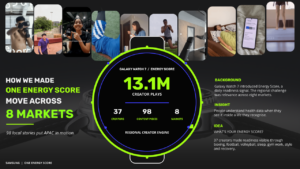
Creators explored the feature through sport, sleep, training and recovery. The campaign involved 37 creators across eight APAC markets, with different routines providing different ways to demonstrate the same feature.
This illustrates how a campaign can connect a technical feature with everyday decisions. For this article, the useful lesson is the content approach: give creators a benefit they can demonstrate within their own lives.
Give Brand Messages Emotional Meaning Through Personal Stories
Some brand messages need more explanation than a product demonstration can provide.
Services involving guidance, education or personal development often benefit from stories that show why someone needed help and what that experience meant to them.
A relevant creator story can make the message easier to relate to. It gives the audience a situation they recognise, whether that is feeling uncertain about a career decision or struggling to establish a routine.
The brand’s role still needs to be clear. Readers should understand how the service connects with the experience being shared.
Keep the Message Consistent Across Creator Content
Once a brand has chosen its intended association, each piece of content should contribute to that direction.
This does not require identical scripts. Different creators can communicate the same benefit through different experiences.
A brand focused on convenient cooking, for instance, could brief one creator to show meal preparation, another to make a quick family dinner and another to share a simple lunch recipe.
The execution varies, while the central benefit stays clear.
A useful creator brief should define:
- The intended association: What should audiences connect with the brand?
- The supporting evidence: What can the product or service genuinely demonstrate?
- The brand’s role: How should it contribute to the content?
- The creative freedom: What can the creator interpret in their own style?
Recurring partnerships can provide opportunities to show that benefit in several situations. Brands should still review whether each post adds something useful and whether the creator’s experience supports the message.
Consistency works best when audiences can recognise the brand’s contribution across the content.
How Can Brands Measure Brand Association?
To assess brand association, brands need to ask what audiences think about them.
Views and engagement help describe content performance. They do not directly establish whether people now connect the brand with convenience, expertise or another intended quality.
A practical measurement plan can combine direct audience research with qualitative feedback:
| Method | What it helps brands understand |
|---|---|
| Open-ended surveys | Which words or ideas people connect with the brand |
| Attribute questions | Whether people associate the brand with a particular quality |
| Exposed and control group comparisons | Whether campaign exposure affected the measured perception |
| Comment analysis | How audiences interpret and discuss the message |
An open-ended question could ask: “What three words come to mind when you think of this brand?”
A more focused question could ask respondents how strongly they associate the brand with easy home cooking.
Decide what you want audiences to associate with your brand before the campaign begins. Afterwards, use survey responses and relevant comments to assess whether that message came through, keeping in mind that other marketing activity may also influence perceptions.
Build Around What You Want Your Brand to Mean
Influencer marketing gives brands opportunities to communicate their identity through people, experiences and recognisable situations.
The foundation is a clear intended association. From there, brands can choose relevant creators, develop content that best demonstrates the message and assess how audiences interpret it.
Before your next campaign, ask: “What do we want people to connect with our brand and what can our creators show to make that connection credible?”
Looking to put that into practice? Explore how KOBE works with brands to develop relevant creator partnerships and campaign concepts.
Frequently Asked Questions
1. What is the difference between brand awareness and brand association?
Brand awareness is whether people recognise your brand. Brand association is what they connect it with, such as convenience, creativity or dependable quality.
2. How does influencer marketing build brand association?
Creators can shape how audiences see a brand through their personality, stories and product demonstrations. A quick recipe video, for example, can connect an appliance brand with easier cooking.
3. How do you choose influencers who fit your brand?
Look at their content, values, experience and audience. Choose creators who have a credible reason to discuss your product and whose style supports your brand identity.
4. Can one influencer campaign change brand perception?
One campaign can introduce or reinforce an association, but lasting change is not guaranteed. Content relevance, existing perceptions and people’s experiences with the brand all play a role.
5. How can brands measure brand association after an influencer campaign?
Use surveys to ask which qualities or benefits people connect with your brand. Relevant comments add context, while engagement figures alone cannot confirm a change in perception.