


Key Takeaways
- Look beyond the size of the audience. Pay attention to whether people regularly come back and engage with the creator.
- Read the comments, not just the number beside them. What people say can reveal how interested they actually are.
- Don’t judge a creator by their best-performing post. One viral moment may not reflect their usual audience.
- Understand what people follow them for. A creator can have influence without being influential in every category.
- Look at what happens after someone watches. Shares, saves, questions and recommendations can show a deeper level of interest.
Finding influencers is easy, but knowing how to vet influencers and find the ones whose audience actually listens takes a little more digging.
Follower count, views and engagement rate are useful starting points, but they don’t always show how strong the relationship is between a creator and their audience.
So, what does an authentic audience actually look like?
Finding influencers is easy. Finding the ones whose audience actually listens to them takes a little more digging.
Follower count, views and engagement rate are useful starting points, but they don’t always show how strong the relationship is between a creator and their audience that relationship matters.
A recent Deloitte research found that more than half of consumers who engage with creators say recommendations from creators they trust make them more likely to consider and purchase from brands.
So, what should brands actually look for?
1. See Who Actually Comes Back
Not everyone who follows a creator will see every post, and that’s completely normal.
What can be useful is looking for signs that some followers are regularly keeping up.
Scroll through a few posts rather than just the latest one. You might notice familiar names appearing again, someone asking when the next part of a series is coming, or followers referring back to something the creator shared previously.
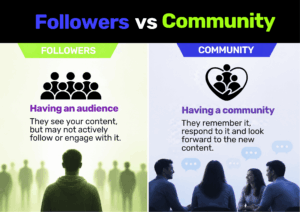
These interactions give you a better sense of whether people are simply coming across the content or actually following the creator over time.
Some simple things to look out for:
- Familiar followers appearing across different posts
- Comments referring to previous content
- People following recurring stories or series
- Creators recognising and replying to their regular audience
None of these alone proves that someone has a strong community. Together, though, they can give brands more context than follower count alone.
KOBE has previously explored how micro-influencers can build stronger trust through niche expertise and closer community connections. The same idea applies when looking at audience authenticity: sometimes the strength of a creator’s community is easier to see through how people interact than how many people follow.
2. Read the Comments, Don’t Just Count Them
A post with 300 comments sounds good.
But before taking that number at face value, have a quick look at what those 300 comments are actually saying.
There’s a difference between a comment section filled with:
Both count as engagement. But they tell you different things about the audience.
The point isn’t that short comments are bad. People don’t need to leave paragraphs for their engagement to be genuine.
Instead, look at the overall mix.
Are people asking questions? Sharing their own experiences? Tagging friends because the content reminded them of something? Does the creator reply and continue those conversations?
This is where influencer vetting becomes less about checking an engagement rate and more about understanding what sits behind it. When looking at authenticity in influencer marketing, trust isn’t built from numbers alone. How creators communicate and build relationships with their audience also plays a part.
3. Don’t Let One Viral Post Tell the Whole Story
You’ve probably come across a creator because one of their videos suddenly appeared everywhere.
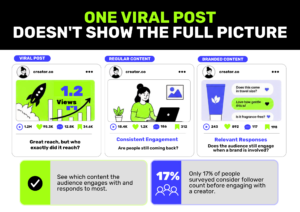
It has 1.2 million views, thousands of likes and a comment section that keeps going.
That’s worth paying attention to, but it shouldn’t be the only post considered.
KOBE has also previously covered how content-first algorithms on platforms such as TikTok, Instagram Reels and YouTube Shorts are changing creator marketing, allowing individual pieces of content to reach people beyond a creator’s existing following.
That’s good news for both creators and brands. Strong content has more opportunities to travel.
But it also means one viral post doesn’t necessarily represent a creator’s usual audience.
When you are figuring out how to vet influencers, compare a few different types of content:
- Their best-performing posts
- Their regular organic content
- Previous branded posts
- Content posted across different periods
Not every post will perform the same way, and that’s completely normal.
What matters is whether there’s a pattern: who keeps engaging, what gets their attention, and whether that interest lasts beyond one standout post.
4. Know what people actually follow them for
Having an authentic audience doesn’t automatically make a creator right for every brand.
Think about the creators you personally follow.
You might follow someone because you trust their food recommendations. Another for skincare. Someone else because they’re genuinely funny.
That doesn’t necessarily mean you’d take the same person’s advice on everything.
Creator trust often has context.
When reviewing a creator, look at the topics their audience naturally responds to. What do people ask them about? Which recommendations lead to more questions? What type of content keeps appearing among their stronger posts?
This can help brands understand not only whether a creator has influence, but where that influence is strongest.
It also explains why a smaller niche creator can sometimes make more sense than a much larger account. KOBE has previously explored this with micro-influencers, where relevance and niche expertise can help build credibility within a specific community.
For brands, it may be more useful to ask not just “How influential is this person?” but “Are they influential for what we’re trying to talk about?” This is where a creator’s niche and expertise can make a difference, as explored in KOBE’s article on Micro-Influencers: Niche Expertise Wins Brand Trust.
5. After posting it doesn’t just stop at the views
Views tell you that someone saw the content.
But sometimes the more interesting signals come afterwards.
Someone saves a restaurant recommendation for the weekend.
They share a travel video with the friend they’re planning a trip with.
They ask where a product is available.
Or they come back later and say they tried something because they saw the creator recommend it.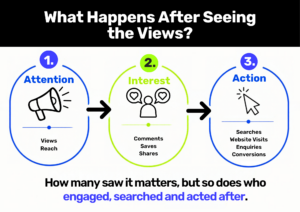 Not every action matters for every campaign, but together they can show whether people are just seeing the content or taking a genuine interest in it.
Depending on your campaign goal, that might mean looking at:
- Saves
- Shares
- Profile visits
- Product questions
- Branded searches
- Website visits
- Enquiries
- Registrations or purchases
KOBE has previously discussed this distinction when looking at influencer measurement in 2026: reach and engagement still provide useful context, but interaction doesn’t automatically equal intent.
Instead of just looking at how much engagement a post gets, look at what people actually do after seeing it. That’s where influencer audience authenticity starts to show real influence.
Want to Understand What Really Builds Influence?
Choosing the right creator is only one part of the picture.
Why people trust certain creators, what makes content feel credible and which signals brands should actually measure all play a part in whether influencer marketing works.
We explore these areas further in What’s Really Driving Influencer Marketing in Singapore, KOBE’s guide to understanding creator fit, audience trust, content and measurement.
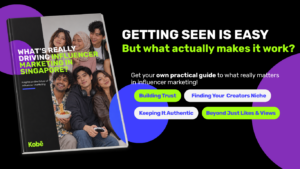
If you’re planning your next campaign or simply want a better idea of what audiences are responding to today, you can get your free copy!
Conclusion
There isn’t one number that tells you whether you’ve found the right creator.
Follower count can tell you the potential size of an audience. Views tell you how far a piece of content travelled. Engagement tells you that people reacted.
But you’ll usually need to look a little deeper to understand the relationship behind those numbers.
See who comes back. Read what people are saying. Look at what the creator is actually known for and whether their audience does something with the content they consume.
At the end of the day, authentic influencers don’t need perfect numbers. What matters is whether there is a real audience behind the content and whether that audience makes sense for your brand.
That extra bit of vetting can make the difference between simply finding a creator who looks good on paper and finding one people actually listen to.
FAQs
1. What does influencer authenticity mean?
Influencer authenticity is how genuine and credible a creator feels to their audience, based on the trust and connection they build over time.
2. How can brands vet influencers before working with them?
Look beyond follower count. Good influencer vetting considers content consistency, comment quality, audience relevance and how people respond to recommendations.
3. How can you tell if an influencer has an authentic audience?
Look for returning followers, relevant comments and genuine conversations that show people are consistently interested in the creator’s content.
4. Does a high engagement rate mean an influencer has an authentic audience?
Not always. Engagement rate shows how much people interact, but the type and quality of those interactions can tell you much more.
5. Why does audience authenticity matter for influencer marketing in Singapore?
Influencer audience authenticity helps brands find creators whose communities are genuinely interested, relevant and more likely to connect with the partnership.